





Myanmar Earthquake Response 2025
Conflict & Displacement • Myanmar
In March 2025, a destructive earthquake hit central Myanmar. In response, HOT in partnership with Myanmar OpenStreetMap Community (myOSM) launched a mapping initiative to fill data gaps in OpenStreetMap. Through funding from the H2H Network, myOSM were able to scale their mapping and HOT supported data use of humanitarian partners in the region.
Table of Contents
Background
Destructive earthquakes on 28 March 2025 in Myanmar exacerbated an already prolonged and complex humanitarian situation. Measuring the impact of the conflict and the earthquake was challenging due to the limited information coming from affected populations, which made it difficult for humanitarian actors to plan resources or respond effectively.
Accurate and rapid building damage assessments played a critical role in the aftermath of disasters to guide rescue efforts, humanitarian aid, and recovery. However, in the Global South, up-to-date map data—particularly in remote and rural areas—was often not readily open or available.
As seen with Myanmar’s earthquakes, decades of military rule had led to challenges in information and data sharing. At the onset of the disaster, the OpenStreetMap (OSM) buildings data gap stood at 85.93% in an area hosting an estimated population of 41,670,509 people. These data gaps compromised the reliability of AI-driven damage assessments, such as those produced by Microsoft AI4G Lab.
HOT led a campaign called "Myanmar Earthquake 2025" to improve building footprint coverage. More information was available on the wiki page. Below were some of the key statistics related to this campaign as of 2 June 2025.
Tasking Manager Projects and Statistics
1,662,712
Total Edits
2,996
Contributors
1,121,907
Δ Buildings
Approach:
The project focused on filling gaps in critical OSM data in affected areas and developing comprehensive building footprint data in Sagaing Region, Mandalay Region, Nay Pyi Taw Region, Bago Region, and Magway Region to better understand impacts and inform early recovery.
1) Remote Data Collection: Skilled mappers remotely mapped building footprints and roads (roads determined as needed) using HOT’s Tasking Manager to expand and improve the quality of baseline open map data across affected areas.
2) Local Data Validation: Data quality checks were conducted by members of the Burmese diaspora familiar with local building structures, alongside HOT’s OSM community.
3) Open Buildings Datasets Source Comparison: At the request of HDX and in consultation with key humanitarian actors, an agile comparison framework was developed to identify the most suitable building footprint data sources (OSM, Google, Microsoft, and Overture) across different phases of the disaster response.
The project also leveraged open-source tools such as MapSwipe and Tasking Manager to identify areas of building damage in priority locations in Mandalay and Sagaing. It conducted comparisons across several damage analyses to support life-saving humanitarian aid and recovery efforts by building a more complete understanding of infrastructure status, enabling safer returns and helping avoid prolonged displacement.
State of the Data, Data Access and Use
Various data sources contributed to building footprints, including open data from Google, Overture, Microsoft, and OpenStreetMap (OSM). While other sources relied heavily on AI, OSM stood out for its human-validated workflow, community-driven approach, and diversity of contributors.
OSM
OSM data could be downloaded from HDX. Users could browse this filtered HDX list or select from the categories below:
- Roads
- Buildings
- Waterways
- Railways
- Health Facilities
- Financial Services
- Populated Places
- Education Facilities
- Sea Ports
- Airports
- Points of Interest
Overture
The Overture Maps Foundation dataset (licensed under the Community Database License Agreement – Permissive v2) combined OSM buildings with machine-mapped footprints from Google and Microsoft. The data was available for exploration and download here, though updates to OSM data occurred roughly monthly, meaning recent edits did not appear immediately.
After the Myanmar earthquake, Overture shared its Myanmar building footprints on HDX. However:
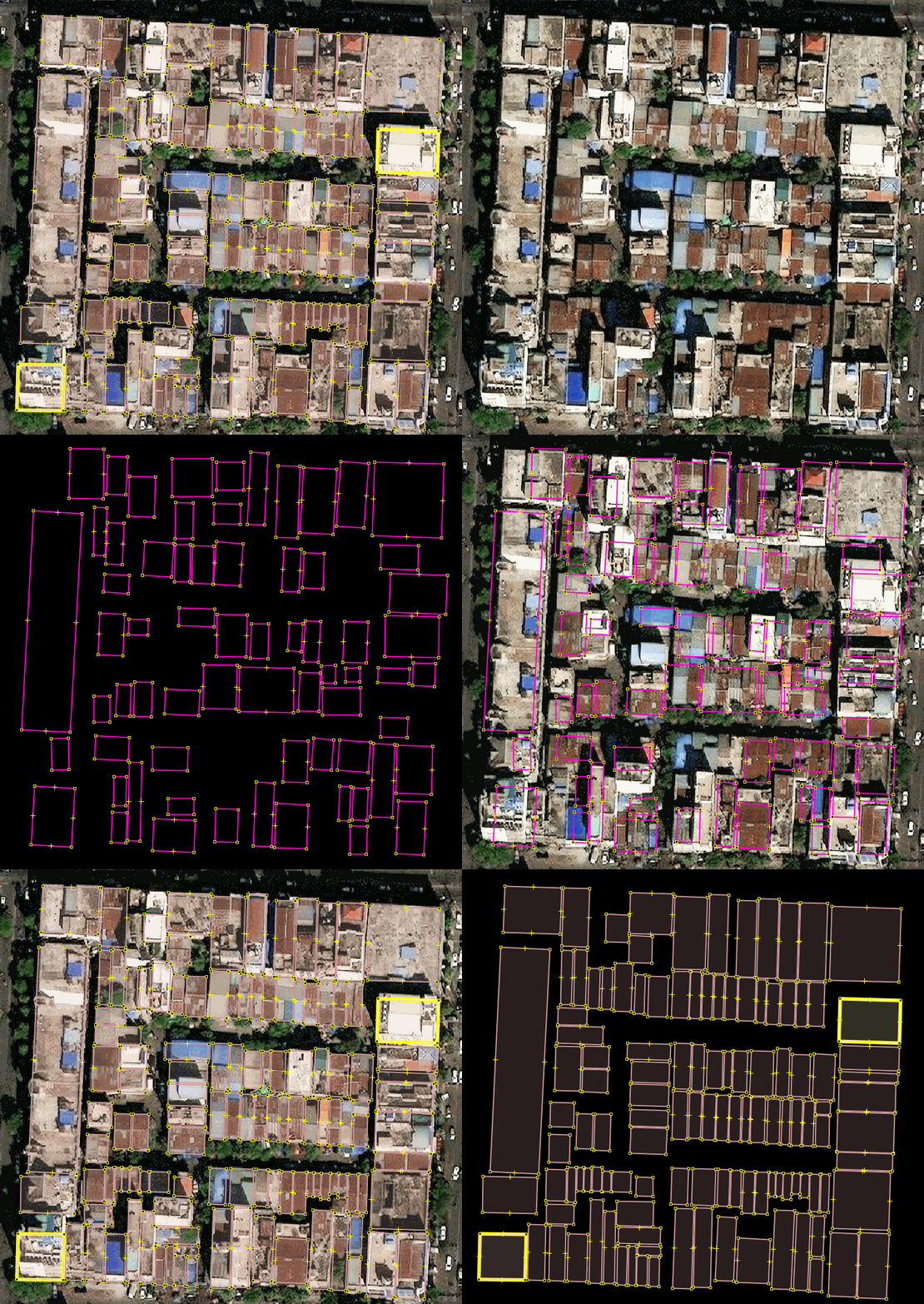
- In densely built areas like Mandalay, Overture’s machine-mapped footprints were often less accurate or complete than OSM’s manually mapped data.
- In rural areas, Overture missed approximately one-third of settlements detectable via satellite imagery, as shown by MapSwipe project results, where volunteers identified built-up areas.
 This project was funded by the H2H Network’s H2H Fund, which was supported by UK aid—from the British people.



.png)